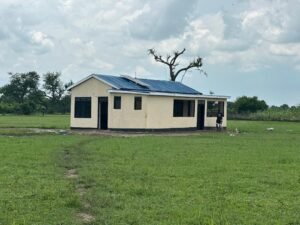

Quick impact Project 2024-2025
Project Name: Construction of Judge Accommodation in Romic, Tonj East County
Donor: United Nation Mission in South Sudan
Implementing Partner: Youth Affairs Center for Africa (YACA)
Introduction
The effective administration of justice is a cornerstone of societal development and stability. In Tonj East County, the need for adequate and secure accommodations for judges has become increasingly apparent as the County continues to grow and its judicial responsibilities expand. The construction of judge accommodations is a vital initiative aimed at provide secure, adequate, and dignified housing for judicial officers serving in Tonj East County. This document outlines the objectives, significance, and anticipated impact of constructing judge accommodations in Tonj East County, marking a significant step towards improving the rule of law and fostering sustainable development in the area.
- Goal: To provide secure, adequate, and dignified housing for judicial officers serving in Tonj East County
Objectives:
- To improve access to justice by enabling consistent judicial presence in Romich, Tonj East County
- To enhance the security and independence of judicial personnel in the region
- To strengthen the rule of law and formal justice mechanisms in a post-conflict setting
- To support the operationalization of existing judicial infrastructure (courthouse)
- To contribute to peace-building efforts by facilitating fair and timely resolution of disputes
Activities (narration how project implemented)
The construction of Judge accommodation in Tonj East County was carried out through a series of well-coordinated activities, ensuring transparency, quality, and community involvement throughout the process.
Needs Assessment, Consultation meeting and Planning: The project began with a comprehensive needs assessment conducted by the YACA, and local judiciary and county administration. Stakeholder consultations were held to identify suitable locations and determine the specific requirements for the accommodation, including security, accessibility, and proximity to the courthouse.
Site Selection and Preparation: After selecting an appropriate site, land clearance and preparation activities commenced. This involved leveling the ground, marking boundaries, and ensuring access to basic utilities such as water and electricity.
Design and Approval: Architectural plans were developed in consultation with judicial officers and local authorities. The designs prioritized safety, comfort, and functionality. These plans were reviewed and approved by relevant government departments to ensure compliance with building standards.
Procurement of Materials and Contractor Selection: A transparent procurement process was undertaken to source high-quality construction materials and select a reputable contractor. Local suppliers and laborers were engaged where possible to support the community’s economy.
Construction Phase: Construction work began with the laying of foundations, followed
by the erection of walls, roofing, and installation of doors and windows. Regular supervision was provided by YACA engineer and project manager to maintain quality and adherence to timelines.
Community Engagement: Throughout the construction period, community members
were kept informed about progress through meetings and updates. Local leaders played a key role in resolving any issues and facilitating cooperation among stakeholders.
Inspection and Handover:
The Handover of Judge accommodation was partial as the UNMISS was not present, however the building, and all assets are transferred solely for safekeeping by the Tonj East County authority. Usage of these accommodations and items is strictly prohibited until official authorization is granted.
- Output of project
Completed Judge Accommodation Facility: A fully constructed and furnished residential
facility for judicial officers, meeting safety, comfort, and functional standards.
Improved Living Conditions for Judges: Judicial officers now have access to secure, adequate, and dignified housing within Tonj East County.
Enhanced Judicial Presence: The presence of judges residing locally enables more regular court sessions and improved access to justice for the community of Tonj East County who have been with no judges for long time.
Strengthened Infrastructure: The project has contributed to the development of local infrastructure, including utilities such as water, electricity, and access roads.
Community Engagement and Employment: Local laborers and suppliers were involved during construction, providing temporary employment and supporting the local economy.
Increased Public Confidence in the Judiciary: With judges living and working in the area, public trust in the legal system and rule of law is strengthened.
The main output of the project is a completed and operational judge accommodation facility, which directly supports the effective functioning of the judiciary in Tonj East County and contributes to broader social and economic benefits for the community.
- Problem encountered/Challenges during implementation.
Challenges Encountered During Implementation in Tonj East County
Security Incidents:
During the project, there was a serious security incident where YACA staff were looted by armed civilians on the way from Wau to Romic. This not only resulted in the loss of valuable property and project resources but also created fear among project staff, temporarily halting activities and necessitating additional security measures.
Poor Road Infrastructure:
The poor condition of roads in Tonj East posed significant logistical challenges. At one point, a contractor’s truck carrying essential construction materials became stuck on an impassable road and remains stranded to this day. This delayed the delivery of materials, disrupted the construction schedule, and increased transportation costs.
Land Disputes and Local Demands:
Local residents demanded financial compensation for the land allocated for the judge accommodation site. Negotiations with community leaders were required, causing delays and increasing project expenses.
Additionally, some community members insisted on higher payments or benefits before allowing construction to proceed, leading to further delays.
General Project Delays:
The combination of security concerns, logistical difficulties, and community negotiations led to overall delays in the project timeline and increased operational costs.
- Deviation from planned objectives/output (if any): No
- Lessons Learned:
Lessons Learned
Importance of Security Planning: The incident involving the looting of YACA staff by armed civilians highlighted the need for thorough security assessments and arrangements before and during project implementation. Future projects should include close collaboration with local authorities and security agencies to protect staff, materials, and assets.
Critical Role of Infrastructure Assessment: Poor road conditions that led to contractor trucks getting stuck demonstrated the necessity of assessing and improving access routes before transporting materials. Early investment in temporary road repairs or alternative transport plans can prevent costly delays.
Community Engagement is Essential: Negotiations over land use and demands for compensation showed that early, transparent, and continuous engagement with local communities and leaders is vital. Building trust and understanding community expectations can help avoid disputes and foster cooperation.
Contingency Planning for Delays: Multiple unforeseen challenges caused significant delays. Incorporating contingency time and resources into project planning allows teams to adapt to unexpected events without compromising overall objectives.
Stakeholder Collaboration: Strong coordination among government agencies, contractors, community leaders, and security forces was crucial in overcoming obstacles. Regular stakeholder meetings and joint problem-solving contributed to eventual project progress. Prices of the construction materials change/ increase very fast, there is a variation in the prices from the planning stage and the implementation period. There is a need to put contingent amount for unforeseen increase in the prices as not to affect the implementation and put pressure on implementing partner.
Documentation and Transparency: Keeping detailed records of incidents, negotiations, and decisions helped maintain transparency and accountability, which is important for donor confidence and future project evaluations.
The project reinforced the value of proactive risk management, strong community relations, flexible planning, and multi-stakeholder collaboration. These lessons will inform better practices and improved outcomes in future infrastructure and development initiatives in similar contexts.
- Conclusion / Comments
The construction of Judge accommodation in Tonj East County represents a significant step forward in strengthening the local justice system and supporting the rule of law. Despite facing considerable challenges—including security incidents, poor infrastructure, land disputes, and complex community dynamics—the project was ultimately able to deliver a functional and secure residence for judicial officers.
The experience underscored the importance of thorough planning, robust risk management, and meaningful engagement with all stakeholders, especially local communities. Addressing logistical and security issues early, maintaining open lines of communication, and being flexible in response to changing circumstances were key factors in overcoming obstacles.
Comments:
The project has not only improved the working and living conditions for judges but also contributed to increased public confidence in the judiciary and enhanced access to justice for residents of Tonj East County.
Future projects in similar environments should prioritize early security assessments, infrastructure improvements, and proactive community involvement to minimize risks and delays.
Continued support for maintenance and ongoing dialogue with the community will be essential to sustain the benefits achieved.
In conclusion, while the journey was challenging, the successful completion of this project demonstrates what can be achieved through collaboration, resilience, and a shared commitment to development and justice.